on emerging workplace trends
leverage Mellow for growth
Collaboration in Game Development for Remote Teams with Practical Tips
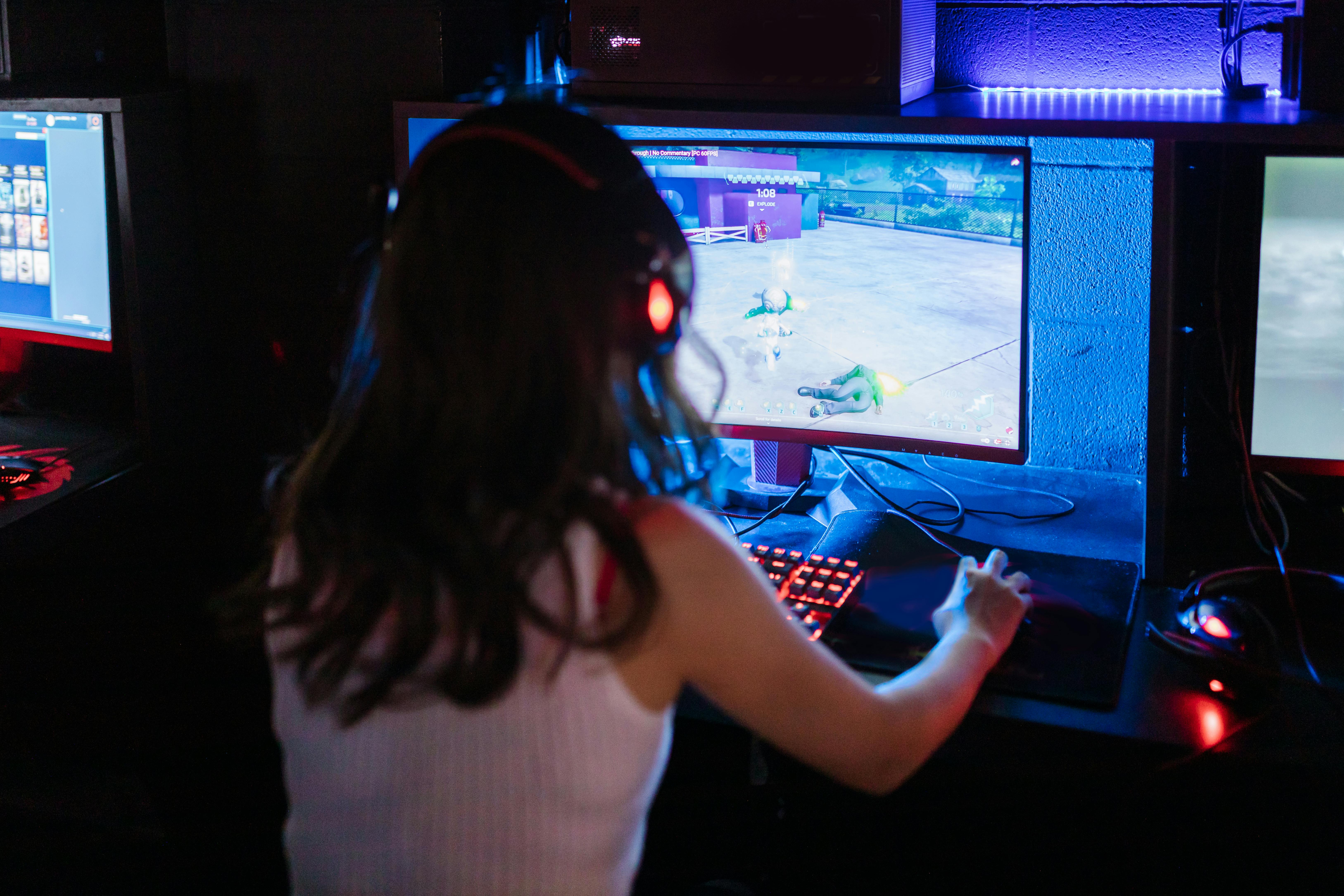
The “garage developer” has become an international, decentralized force in the contemporary gaming industry. Now, one AA or AAA game could have a lead programmer in Montreal, concept artist in Berlin and a QA team in Kuala Lumpur. Although this borderless strategy brings access to an unbelievable amount of talent, it also comes with a set of its own boss battles: asynchronous communication, nightmares with version control, and gradual loss of team spirit.
For studio managers and project leads, the transition to remote-first or hybrid models isn't just a logistical change - it’s a fundamental shift in how games are "built." Without the physical proximity of a shared office, the friction between disciplines (art, code, design) can quickly turn a promising project into a series of missed milestones.
This guide will break down the mechanics of an efficient Game Dev Collaboration, discuss the various types of remote work, and offer practical tips to make sure that the distributed team can work as one, cohesive unit.
What is Collaboration in Game Development?
Fundamentally, collaboration in gamedev is the craft of technical and creative coordination. Contrary to the usual development of software, creating a game involves a continuous feedback mechanism between extremely divergent disciplines. The logic of a programmer has to enable the vision of an artist who in turn has to comply with the balancing needs of a designer, all under the performance budget of the hardware.
- Technical Harmony: Assets and code are merged without breaking the build.
- Creative Alignment: Every team member understands the "feel" of the game, even if they aren't in the same room.
- Operational Transparency: Everyone knows what is being worked on, who is blocked, and what the next milestone entails.
In the absence of these pillars, remote development tends to create a situation of “Siloing” in which the departments operate independently, producing a final product that seems to be disjointed and rough.
Types of Remote Collaboration in Game Development
You need to determine which model of collaboration your studio is applying before adopting best practices because each of them needs a different “flavor” of management.
1. Freelance Teams
The model is very flexible and economical with respect to particular buckets of work. You may engage a freelancer to work on a three-month contract to do UI icons or a particular collection of 3D environment art.
- The Challenge: Freelancers often work for multiple clients. Their "alignment" with your studio culture is usually low, meaning your documentation must be flawless to ensure they don't go off-track.
2. Full-Time Remote Work
In this case, the developers are the members of your staff, who are merely working from home. They become members of your Slack, attend daily stand-ups, and are also long-term invested in the success of the project.
- The Challenge: Maintaining a "company culture" and preventing burnout. The lines between "home" and "work" blur, which can lead to high-value talent overworking themselves.
3. Outsourcing to a Professional Team
This involves hiring an entire external studio to handle a massive component of the game.
- The Challenge: The "Black Box" effect. If the communication bridge between your studio and the outsourcing partner isn't strong, you may receive a finished product that doesn't fit the technical requirements of your main build.
7 Tips for Collaboration in Game Development
To bridge the gap between distributed teams, you need more than just a Discord server. You need a structured philosophy of collaboration.
1. Define Roles and Responsibilities for Everyone
In a physical office, you can lean over a desk and ask, "Who is handling the lighting for Level 3?" In a remote team, that lack of clarity creates "dead air."
Assign a RACI Matrix (Responsible, Accountable, Consulted, Informed) to each key feature. Whenever a bug is found in the physics engine, each member of the team must be aware of which Jira queue the bug is in. This averts the not my job syndrome that usually besieges remote projects.
2. Monitor the Team's Progress and Needs
In remote gamedev, blockers should be monitored by managers, and in many cases, they are only interested in output (tickets closed). A remote developer might spend three days struggling with a broken SDK because they feel "bad" about bothering a senior lead.
Implement a "No-Blame" blocking system. When you are updating on an asynchronous basis, have each developer in your daily update list one thing that is slowing them down. This changes the culture of reporting status to solving problems
3. Choose Effective Tools
Your virtual office is your Tech Stack. Do not use generic tools, but use solutions that are gamedev-specific.
- Version Control: For large binary files (art assets), Perforce (Helix Core) is the industry standard for a reason. Git with LFS is an alternative, but ensure your artists are comfortable with it.
- Communication: Slack for quick pings, but Discord for "always-on" voice lounges where developers can sit in silence and "co-work" as if they were in the same room.
- Task Management: Jira or Hansoft are built for the complexities of gamedev sprints.
4. Maintain a Structured Document Archive
The Single Source of Truth in a remote setting is the Game Design Document (GDD) and the Technical Design Document (TDD). When the jump height is altered by 10%, the documentation must be updated accordingly.
It should be a searchable Wiki (such as Notion or Confluence) instead of a disorganized Google Docs folder. A new freelancer ought to be in a position to read the archive and know the history of the project without having to be in a meeting with them taking five hours.
5. Hold Regular Feedback Meetings (The "Golden Window")
With teams spread across time zones, finding a time to meet is difficult. Identify a "Golden Window" - a 2-hour block where the most time zones overlap.
Use this time for Synchronous Feedback. Art reviews, "sprint retrospectives," and "show-and-tell" sessions should happen here. Watching the game being played on a screen-share session is worth more in terms of team morale than a thousand text messages.
6. Develop an Approach to Dispute Resolution
Creative friction is inevitable. Will the character move quicker or strike more? When a designer and a programmer are not in agreement when they work remotely, the argument may be brewed in private chats.
Establish a "Lead Arbiter" for each department. When a disagreement cannot be resolved in 30 minutes of the conversation, it is referred to the Lead, who makes the final decision. This prevents "creative deadlock" that stalls production.
7. Maintain Informal Communication Outside of Work
The best ideas tend to happen in the "watercooler" talk. You must create such moments in a remote set up.
- Gaming Nights: Play a competitor's game together and critique it.
- Off-Topic Channels: Have a place to share pet photos, food, or industry news.
- Virtual Coffee: Randomly pair two team members for a 15-minute non-work chat once a week. This builds the empathy required to survive the stressful "crunch" periods.
Conclusion: Building Your Team with Mellow
The success of your game doesn't depend on where your team sits, but on how effectively they communicate. Nevertheless, the largest "pain point" on the part of the managers is not the daily stand-up, but the Search and the Management.
Finding "Collaboration-Ready" Talent with Mellow AI Scout
What do you do to determine whether a remote freelancer is a good collaborator or not? Conventional resumes never tell you how a developer works over a Perforce merge or whether an artist adheres to a style guide.
This is why we developed Mellow AI Scout.
When you need to scale your team, AI Scout does the heavy lifting:
- Industry-Deep Vetting: It "scouts" the global market to find contractors who aren't just technically skilled, but have a proven track record of working in high-intensity, remote gamedev environments.
- Precision Matching: Tell the AI your engine, your art style, and your time zone requirements. It provides a "Shortlist" of candidates who are a 95% match for your specific culture.
- Speed to Hire: Instead of spending weeks on ArtStation and LinkedIn, you get a curated list of top-tier talent ready to sync with your team immediately.
Managing the Global "Paperwork" with Mellow
Once you've found your dream team through AI Scout, the next hurdle is the "un-fun" part of gamedev: contracts, compliance, and payments.
Mellow provides an all-in-one ecosystem for the remote studio:
- Compliance: We also manage the local labour regulations and tax reporting, so your international contractors are onboard legally.
- IP Protection: Our automated contracts provide that all of the code and all of the texture is owned by your studio, regardless of the location of the creator.
- Unified Payments: Stop managing 20 different PayPal or bank transfers. Compensate your whole world workforce in a single tap. Whether your lead dev in Georgia needs a bank wire or your artist in Canada needs an e-transfer, Mellow will handle the distribution immediately.
Remote Gamedev Collaboration Checklist:
| Priority | Tool/Action | Benefit |
|---|---|---|
| High | Perforce / Git LFS | Avoids broken builds and lost work |
| High | Mellow AI Scout | Finds "vetted" remote collaborators fast |
| Medium | "Golden Window" Meetings | Ensures cross-timezone alignment |
| Medium | Centralized Studio Wiki | Reduces "Question Overhead" |
| Low | Virtual Gaming Nights | Prevents isolation and burnout |