on emerging workplace trends
leverage Mellow for growth
Game Development Outsourcing: A Quick Guide
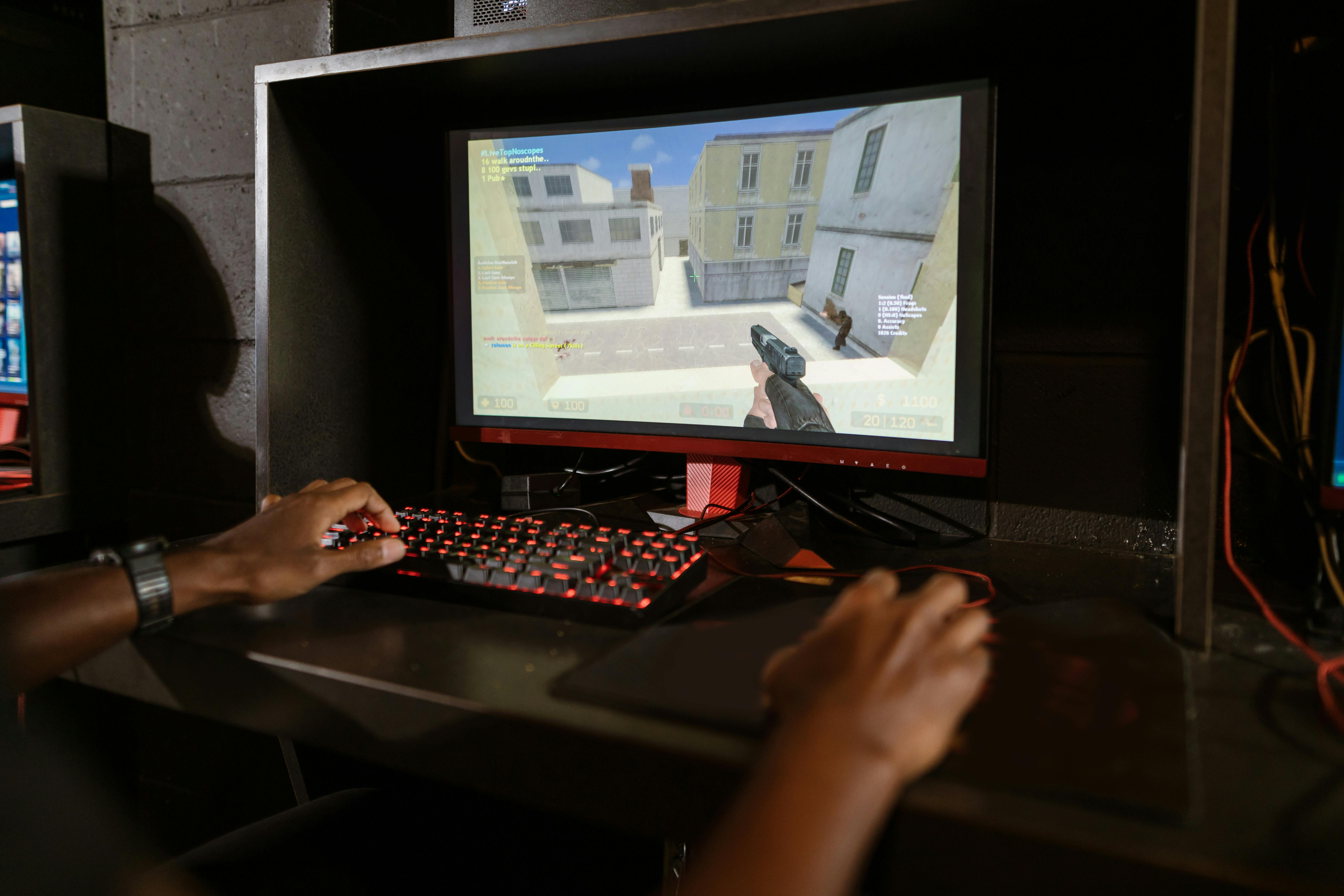
The video game market has become a complex ecosystem of continuous service, high-fidelity graphics, and cross-platform accessibility, rather than a hit-driven industry, in the rapidly changing environment of 2026. The issue with a good idea is no longer a challenge to the studio owners, startup founders, and project managers. Execution is the challenge. With player demands of AAA quality trickling into the indie and mid-core markets, the need to produce polished and bug-free content on strict schedules is enormous.
This is the reason why game development outsourcing has ceased to be a cost-saving "hack," but a key strategic pillar. The road to a successful external partnership is paved with risks, though: unreliable contractors, budget creep, loss of creative control, technical debt.
This gamedev outsourcing guide aims to give a comprehensive dissection of how to run this process, reduce risks, and use the latest tools such as Mellow AI Scout to identify the top 1% of talent anywhere in the world without months of manual work.
What is Game Development Outsourcing?
Game Development Outsourcing in its simplest form involves assigning certain parts of a game development pipeline, or the whole project to a third-party organization or a group of specialized freelancers.
Traditionally, outsourcing was considered as the means of managing the grunt work such as localization or porting. Nowadays it has developed into Co-Development. A common practice now is that a core IP and creative vision is operated by a so-called lead studio, with specialized external teams undertaking the high-end technical work such as:
- Custom Engine Optimization: Tuning Unreal or Unity for specific mobile hardware.
- High-Fidelity 3D Art: Creating thousands of assets for open-world environments.
- Narrative Design: Writing complex branching dialogues in multiple languages.
- Live-Ops Support: Maintaining servers and seasonal content updates post-launch.
GameDev Outsourcing is the best leverage for a startup. It enables a lean team to tap into infrastructure and specialized skills that otherwise would require years and millions of dollars to develop internally.
Types of Game Development Outsourcing Models
The decision that a manager makes is the first and most important one: selecting the appropriate engagement model. Depending on your decision, your control, the cost structure, and the complexity of integration will be determined.
Full-Cycle Outsourcing
The external partner in this model handles the complete development cycle- pre-production and prototyping to the final release and post-launch patches. You are the source of the big-level idea, the Game Design Document (GDD), and the capital.
- Pros: Minimal management overhead for the client; allows you to focus on marketing and publishing.
- Cons: Highest cost; significant risk if the partner’s vision deviates from yours; difficult to "course-correct" late in production.
Task-Based Outsourcing
This is a mostly typical model of an established studio. You find a particular “bucket of work”, e.g. Character Rigging, VFX, or Sound Design, and give it to an expert.
- Pros: Highly predictable costs; you only pay for what you need; easier to verify the quality of a specific niche.
- Cons: Requires strong internal technical leadership to "plug" the external assets into the game engine without breaking things.
Collaborative Development (Staff Augmentation)
You do not delegate a task, you invite outside developers to your team. They will work in your repositories, stand-up with you, and report to your Lead Programmer. This is the platinum rule of the Crunch periods, or introducing a given skill (such as VR/AR knowledge) to a core team.
- Pros: Maximum control; full transparency; knowledge remains within your internal systems.
- Cons: Higher management overhead; potential for "culture clash" between internal and external staff.
Benefits of Game Development Outsourcing
What is so special about Game Development Outsourcing? It is no longer about the bottom line but agility and risk mitigation.
1. Cost-Efficiency
The obvious benefit is labor cost, but the hidden benefit is infrastructure. When you hire an in-house developer in a tech hub like Toronto or London, you aren't just paying their salary. You are paying for:
- High-end workstations (RTX 50-series builds).
- Software licenses (Autodesk, Adobe, Perforce).
- Office space and hardware security.
- Payroll taxes and benefits.
Outsourcing converts these high fixed costs into variable costs, preserving your runway.
2. Access to Specialized Talent
The worldwide talent pool is more profound than a local market. The duration of the contract may be four months with a specialist in "Deterministic Physics for Multiplayer Racing" required. Locating such an individual in a locality is like a needle in a hay stack. Outsourcing provides you with direct access to experts who have dedicated 10 years to mastering a single technical niche.
3. Faster Time to Market
“Follow the Sun" is a competitive weapon in gamedev. The workday can never be exhausted by having a core staff in North America and outsourced staff in Eastern Europe or the Southeast Asian region. Overnight, the feedback loops are closed and your project proceeds as your main office is asleep.
4. Focus on Core Competencies
If your studio’s genius lies in "Combat Mechanics" and "Game Feel," you shouldn't be wasting your Lead Programmer’s time on building a custom GDPR-compliant player database or debugging the Nintendo Switch port. Outsourcing the non-core, but functional aspects allows your stars to concentrate on what makes the game a "Hit."
5. Scalability and Flexibility
The process of game development is cyclic. During the peak production of a 3D open world, you need 50 people, but you need 5 during the initial phase of the production, which is the "Paper Prototype" stage. With outsourcing, you can expand to the top of the Mountain and contract to the bottom of the Valley without the legal and ethical cost of a mass layoff.
6. Security Considerations
High-level security measures are applied by professional outsourcing companies (and verified contractors): encrypted VPNs, special air-gapped workstations with sensitive IP, and strict NDAs. A specialized outsourcing company in most aspects offers a safer development environment as compared to a distributed team of unmanaged freelancers.
When Should You Outsource Game Development?
Outsourcing should be a proactive choice, not a desperate reaction to a missed deadline. The best times to look for an external partner are:
- Limited Internal Resources: Your team is talented but stretched thin. If your Art Director is also trying to do the UI/UX, both will suffer.
- Need for Niche Skills: You are moving from 2D to 3D, or from Single-player to Multiplayer. Don't let your team "learn on the job" at the expense of your release date.
- Tight Deadlines: A publisher-mandated release window is approaching, and the "asset mountain" is still too high.
- Exploring New Game Concepts: You want to build a "Vertical Slice" or a "Proof of Concept" to show investors without diverting your main team from their current project.
How to Choose the Right Game Development Partner
This is where projects either succeed or enter a "Death Spiral." The old fashioned method of finding the partner is months of scrolling through LinkedIn and browsing ArtStation and conducting interviews with the candidates who may have fluffed their portfolios with group projects they lightly worked on.
This manual vetting is the bottleneck to the modern studio manager. This is why we created Mellow AI Scout.
Step 1: Identify Your Project's Needs
Define your Minimum Viable Asset before you go out in search of a partner. Do you require a studio offering Art and Code or simply a 3D Animator? Record your technology stack (Engine version, Version Control system, Communication tools).
Step 2: Leverage Mellow AI Scout for High-Speed Vetting
Mellow AI Scout helps you to discover the best of the best in the gamedev industry without having to sift through hundreds of mediocre applications.
When you post a request on Mellow, AI Scout becomes your headhunter. It does not simply search on the basis of such keywords as a typical job board, but rather conducts a comprehensive search of the global contractor market:
- The "Top Contractor" Filter: AI Scout provides access to a curated list of performers who have successfully shipped titles in your specific genre (e.g., RPG, Shooter, Hyper-casual).
- AI-Scored Shortlists: Our algorithm "scores" candidates based on their actual portfolio matching, previous client satisfaction, and technical depth. You receive a list of "Best Fits" within hours, not weeks.
- Industry Matching: Whether you need a specialist in Unreal Engine 5 Nanite optimization or a Concept Artist with a specific "Grimdark" aesthetic, AI Scout finds the match based on visual and technical data points.
Step 3: Evaluate the Partner's Portfolio (The Technical Deep Dive)
When AI Scout has provided you with the shortlist, go beyond the “beauty shots”. Request: Wireframes, Topology, and Code Samples. A beautiful character model is a weakness when it contains 2 million polygons and crashes a mobile device.
Step 4: Evaluate Communication and Workflow
Communication is the number one cause of project failure. Make sure that the partner utilizes your stack (Slack, Discord, Jira, Perforce). Their “Soft Skills” are to be noted during the first interview. Do they clarify you on your GDD, or do they simply say “Yes” to all? A partner who pushes back on unrealistic goals is more valuable than one who promises the moon and delivers a pebble.
Step 5: Start with a Test Project (The "Paid Trial")
Do not ever sign a six-figure contract in an interview. Give a small, time-constrained, paid task, such as: “Create one game-ready weapon model” or “Optimize this particular shader”. This shows their actual turnaround time in the field and their response to feedback.
Step 6: Establish Clear Terms and Contracts via Mellow
Once the test is passed, the paperwork begins. This is where most international hiring gets stuck in "Legal Limbo."
Mellow simplifies this by providing:
- IP Protection: Automated contracts that ensure all Intellectual Property—from code to concept art—is legally transferred to your company.
- Compliance: Whether your business is in Ontario reporting to the CRA or based in the US, Mellow handles the local tax compliance and labor laws for your global contractors.
- One-Click Payments: Send a single payment to Mellow, and we distribute it to your global team in their local currency, even via e-transfer or local bank wires.
Step 7: Provide Ongoing Support and Maintenance
Outsourcing is a relationship. You have to consider the outside team as a part of you. Give them internal documentation, art style guides and feedback on their commits regularly.
Step 8: Cultural Compatibility and Time Zone Strategy
A 10-hour time difference can either be a nightmare or a superpower. With proper planning of your tasks, then you can have a continuous development cycle. High-intensity voice meetings can be done on the "Overlapping Hours" (typically 2-3 hours a day) and the rest of the time can be spent on “Deep Work”.
Conclusion: Turning Risk into Reward
Game Development Outsourcing is not merely a cost saving measure anymore, it is the sole solution to compete in a market that requires an endless supply of content and flawless performance. Outsourcing the heavy-lifting of the technical and production means, you leave your own team to do what they do best, namely be innovative.
The quality of first hire is the key to a stress-free outsourcing experience. Don't waste your lead developer's time acting as a recruiter. Hire Mellow AI Scout to discover the best contractors in the gamedev market, who are vetted by technology and are willing to build.
When the talent is identified, leave Mellow to do the boring aspects of the business, the international payments, the legal compliance and the IP protection so that you can focus on what counts, the shipping of your game.
GameDev Outsourcing Checklist for Success
| Milestone | Action Item | Goal |
|---|---|---|
| Pre-Outsourcing | Finalize GDD and Art Style Guide | Prevent "Scope Creep" |
| Sourcing | Use Mellow AI Scout | Find the Top 5% Candidates |
| Vetting | Technical Portfolio Review + Test Task | Verify Skill vs. Resume |
| Onboarding | Mellow Compliance Contracts | Secure IP and Legal Rights |
| Production | Daily Syncs and Repository Access | Maintain Quality Control |