on emerging workplace trends
leverage Mellow for growth
Game Development Team Roles Explained for Building Winning Teams
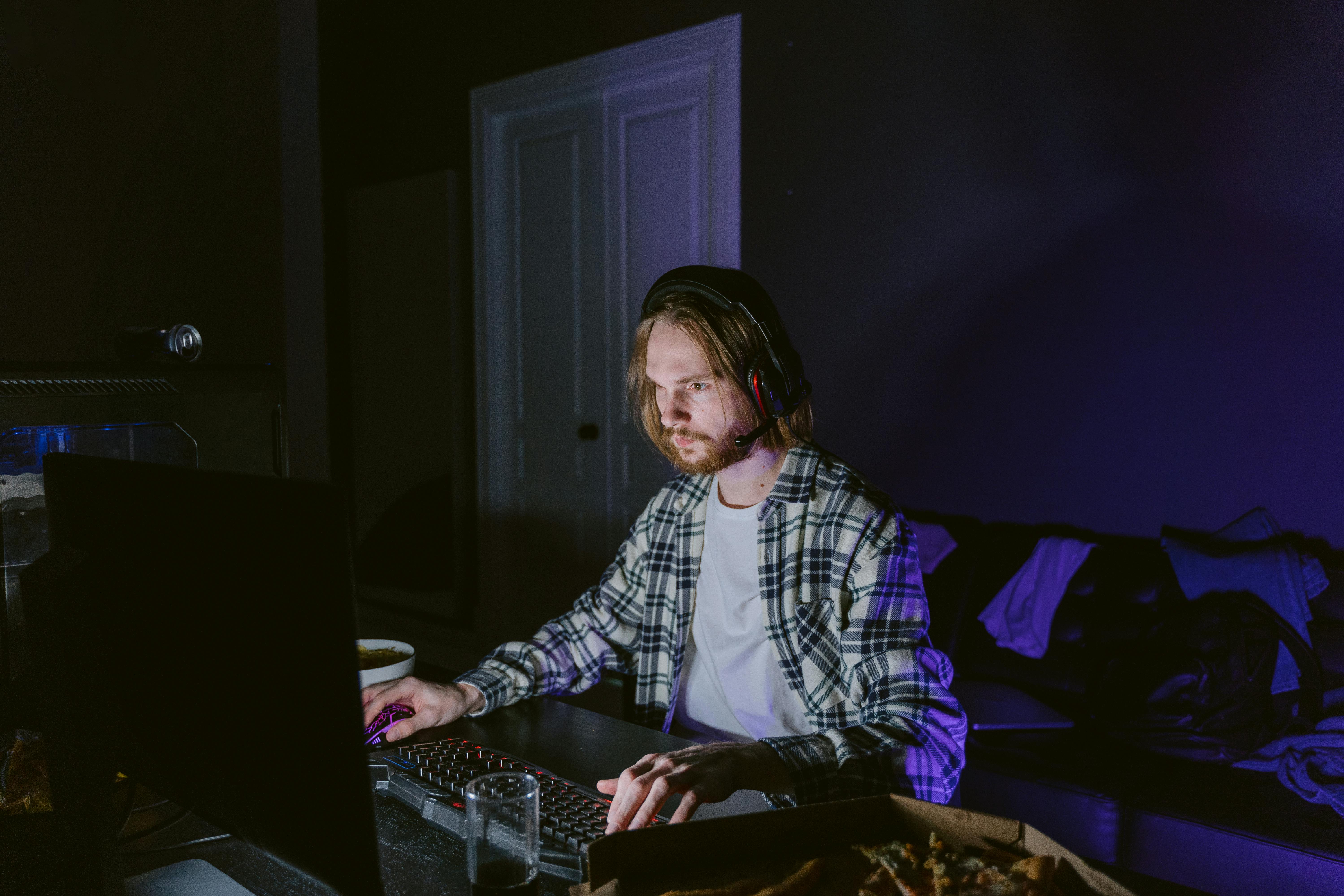
Creating a successful video game is no longer a matter of a great idea or a single talented coder in a garage. In today's landscape of global competition with player expectations at a premium, the success of a title is all about the synergy of a specialized team of people. For studio owners and project managers, the challenge isn't necessarily to find "talent" - it is to find the specific game development roles that will fill the gap between a concept and a polished, profitable product.
Whether you are a small indie organization scaling up or a department head in a large corporation managing a fleet of freelancers, understanding the hierarchy and function of different roles in game development is your first line of defense against project creep and budget overruns.
Game Development Team Roles Explained for Building Winning Teams
In this guide, we will break down the essential positions in a game development company, explore how they interact in a remote-first or outsourced environment, and show you how to leverage AI to ensure your hiring process is as precise as your game’s code.
1. Types of Game Developers: The Technical Foundation
At the core of any project are the people who make experience happen out of logic. When we say game developer roles, we are often speaking of the software engineers that create the framework of the game. However, "developer" is a wide term. To have a winning team you need to know the sub-specializations.
Gameplay Programmers
These developers are responsible for the "feel" of the game. They write the code that handles character movement, combat mechanics, and how the world reacts to the player. If the jumping feels "floaty" or the shooting feels "snappy," that is the work of a gameplay programmer.
Engine Programmers
In larger projects, especially those not using off-the-shelf solutions like Unity or Unreal, engine programmers create the core tools. They focus on memory management, rendering pipelines, and physics systems. Even if you are using commercial engines, there are many cases where you need an engine specialist to optimize the code for specific platforms such as mobile or console.
Back-end and Network Engineers
If your title involves any kind of multiplayer component, leaderboards or in-game purchases, these positions in game development are non-negotiable. They manage servers, ensure low latency, and protect the game against cheating and data breaches.
Tools Developers
Often, the unsung heroes, tools developers create custom software that allows designers and artists to import their work into the game without needing to write code themselves. They build the "pipelines" that make the rest of the team more efficient.
2. Game Designers in Modern Game Design
If the developers are the builders, the designers are the architects. A common mistake for managers is assuming that one person will be capable of handling all aspects of the design. In the modern game development team roles, design is highly segregated.
Systems Designers
They focus on the "math" of the game. Systems designers balance the economy, determine how much XP is needed to level up, and ensure that no single strategy is overpowered. Their goal is to create a fair and engaging loop that keeps players coming back.
Level and Environment Designers
These roles take the mechanics that are provided by the gameplay programmers and the assets provided by artists to create the actual play space. A good level designer understands flow, pacing, and how to use the environment to guide the player without using intrusive tutorials.
Narrative Designers
Unlike traditional writers, narrative designers concentrate on how the story is being told (gameplay). They work on dialogue trees, environmental storytelling (like notes left on a desk), and ensuring that the plot doesn't contradict the player’s actions.
Key Insight: For managers of remote teams, the Producer must act as the primary sync point between Narrative and Systems design to ensure the "vision" remains consistent across time zones.
3. QA Specialists in Game Development
One of the most hazardous jobs to be missed in video game manufacturing is Quality Assurance (QA). Many budget-conscious studios try to outsource this to "friends and family," but professional QA is a technical discipline, not a hobby.
Functional Testing
QA specialists look for "bugs" in the traditional sense—crashes, clipping through walls, or broken quests. They include detailed steps to reproduce the issues so that the developers can fix them soon.
Compatibility Testing
With thousands of different mobile device setups and different PC hardware setups, compatibility testers make sure that the game can be played by everyone correctly, regardless of their hardware.
User Experience (UX) Testing
This goes beyond bugs. UX testers test whether the game is intuitive or not. If players consistently get lost in a menu or don't understand a core mechanic, the QA team identifies these friction points before the game hits the market.
4. Graphic Artists and Animators: The Visual Identity
The visual appeal is what typically sells a game in the first five seconds of a game trailer. Managing different roles in game development on the art side means having a keen eye for technical constraints.
Concept Artists
They are the first to touch the project. Concept artists draw the "mood boards" and character sketches that define the aesthetic. Their work is the blueprint for everybody else.
3D Modelers and Texture Artists
These specialists turn 2D sketches into 3D objects. Modelers handle the geometry (the "sculpt"), while texture artists apply the colors, shaders, and materials that make a surface look like rusted metal or soft fur.
Animators and Riggers
Riggers create the "skeleton" for 3D models, defining how they can move. Animators then bring them to life. In modern gamedev, this often involves working with Motion Capture (MoCap) data to ensure realism.
UI/UX Designers
Often overlooked in the "art" category, UI designers design the menus, HUDs (Heads-Up Displays), and icons. Poor UI may ruin a masterpiece making it frustrating to navigate.
5. Management for Team Unity: The Glue
When it comes to dealing with freelancers or distributed teams, the role of management in game development becomes the most important factor when it comes to success.
The Producer
The Producer is the "owner" of the timeline and budget of the project. They don't necessarily do any writing or drawing; their job is to remove "blockers." If the art team is waiting on a tool from the dev team, for example, the Producer jumps in to prioritize the task.
Project Managers (PM)
While Producers focus on the big picture, PMs focus on the day-to-day. They manage the "sprints" and deal with the Jira tickets and make sure that every freelancer knows exactly what they need to deliver by Friday.
6. How to Effectively Outsource Your Project
Managing a global team offers immense benefits: access to world-class talent and 24/7 development cycles. However, the biggest "pain point" for managers is the high costs of a bad hire. When you are looking for game developer roles abroad, how do you know whether or not a portfolio is real or if a candidate is a perfect fit for your technical stack?
This is where the traditional hiring process tends to break down, and hundreds of hours are spent screening manually.
Solving the Hiring Bottleneck with Mellow AI Scout
At Mellow, we understand that for a game studio, time is literally money. Every week spent searching for a Lead Animator is a week your project sits in limbo.
To solve this, we developed Mellow AI Scout.
Instead of forcing your HR or Lead Dev to manually comb through thousands of resumes and ArtStation portfolios, AI Scout automates the heavy lifting:
- Precision Screening: Our AI "scouts" all candidates based on your specific project requirements. It doesn't just look for keywords; it analyzes the depth of experience in specific game development team roles.
- Portfolio Verification: It cross-references portfolios against the requirements of your game’s engine and art style, ensuring the candidate can actually deliver the "look" you need.
- Speed to Hire: AI Scout provides a shortlist of the top 5% of candidates who are not only skilled but are also compliant for international hire.
Why Use Mellow for Your Gamedev Team?
- Compliance: We handle the local labor laws in over 150 countries, ensuring your "freelancer" isn't accidentally classified as a full-time employee.
- Payments: Send one invoice to Mellow, and we distribute payments to your global team in their local currencies or via preferred methods like e-transfer.
- Onboarding: Get your new Concept Artist or QA Lead signed and working in minutes, not weeks.
Key Takeaways for Game Managers:
| Role Category | Primary Focus | Why it Defines Success |
|---|---|---|
| Developers | Technical Architecture | Stability and Performance |
| Designers | Player Experience | Retention and Engagement |
| QA Specialists | Risk Mitigation | Polish and Reviews |
| Artists | Visual Aesthetics | Marketability and Immersion |
| Management | Team Synchronization | Delivery and Budget |
Conclusion: Building for the Long Term
The success of your title isn't defined by the roles you fill, but by how well those roles communicate. By understanding the nuances of positions in game development—from the technical rigors of engine programming to the creative vision of narrative design—you can build a team that is resilient and efficient.
Don't let the "pain" of hiring slow down your development cycle. Use the right tools to find the right people.
Ready to find the perfect fit for your next title? Create a request in Mellow AI Scout today and let our technology find the specialized talent your project deserves, while you focus on building the next big hit.